


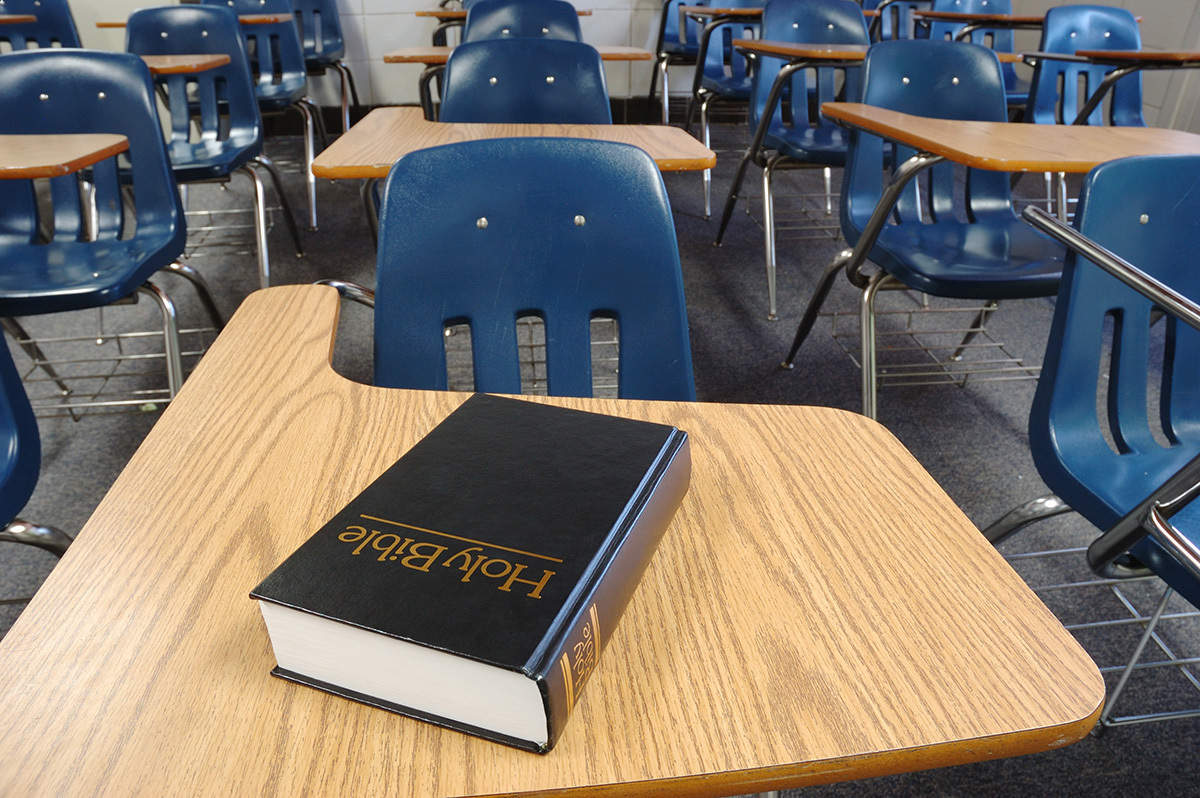

There’s a battle right now related to religion and Oklahoma schools. Oklahoma Superintendent Ryan Walters is in favor of greater religious expression in the public schools of that state. Others in the “The Sooner State,” including the state attorney general and some confused clergy, oppose what Walters is attempting to do.
Walters wants schoolchildren to have access to the Bible and the Ten Commandments in school.
Walters said in reference to Engel v. Vitale, the 1962 Supreme Court decision that threw out school prayer as unconstitutional: “I think they were dead wrong on that. Individuals have the right to express their religious beliefs. That does not stop in a school building,”

Get Our Latest News for FREE
Subscribe to get daily/weekly email with the top stories (plus special offers!) from The Christian Post. Be the first to know.
Walter also said, “What I’m trying to make sure is our kids understand American history.”
The opposition is claiming that, in effect, Walters wants to “establish religion” in the schools.
But what does our history show?
The First Amendment begins, “Congress shall make no law respecting an establishment of religion or prohibiting the free exercise thereof.” Historically, this was understood to mean that there would be no established church at the federal level in the United States.
Even at the time the First Amendment to the Constitution was adopted in 1791, prohibiting a federal church, a handful of states had their own established churches at the state level, and saw no conflict between that and the First Amendment. The last of these to wither away was that of Massachusetts in 1833.
Meanwhile, one of the great legal scholars at Harvard in the 1800s was Joseph Story, who went on to serve as a Justice on the Supreme Court. In 1851, Story wrote a commentary on the Constitution.
Story wrote: “Probably at the time of the adoption of the Constitution, and of the amendment to it now under consideration [the First Amendment], the general if not the universal sentiment in America was, that Christianity ought to receive encouragement from the State so far as was not incompatible with the private rights of conscience and the freedom of religious worship.”
He added, “An attempt to level all religions, and to make it a matter of state policy to hold all in utter indifference, would have created universal disapprobation, if not universal indignation.”
Justice Story continued, “The real object of the First Amendment was not to countenance, much less to advance, Mahometanism [Islam] or Judaism or infidelity by prostrating Christianity; but to exclude all rivalry among Christian sects, and to prevent any national ecclesiastical establishment which should give to a hierarchy the exclusive patronage of the national government.”
In other words, according to a great legal scholar writing fairly close to the founding era, the purpose of the First Amendment was not to banish God from the public arena.
Jumping ahead to the twentieth century, another associate justice of the Supreme Court, William Rehnquist, who would go on later to serve as the Chief Justice, wrote this about the founders and the First Amendment:
“The true meaning of the Establishment Clause can only be seen in its history … The Framers intended the Establishment Clause to prohibit the designation of any church as a ‘national’ one. The Clause was also designed to stop the Federal Government from asserting a preference for one religious denomination or sect over others.”
Rehnquist gave an example from the very same men who wrote the First Amendment:
“George Washington himself, at the request of the very Congress which passed the Bill of Rights, proclaimed a day of ‘public thanksgiving and prayer, to be observed by acknowledging with grateful hearts the many and signal favors of Almighty God.’ History must judge whether it was the Father of his Country in 1789, or a majority of the Court today, which has strayed from the meaning of the Establishment Clause.”
Thankfully, since Rehnquist wrote those words in 1985 in the case of Wallace v. Jaffre, there have been more “originalists” ruling on the high court — adding needed balance to the treatment of Christian expression in the public arena. Nonetheless, the battle for religious liberty is far from over.
As to the current battle, NBC observes: “Whatever happens in the Oklahoma case, more religious rights cases touching upon the establishment clause are on the horizon. Litigation is already underway over a law in Louisiana that would require public schools to display the Ten Commandments. A federal judge blocked the measure.”
Thomas Jefferson is often invoked as effectively the “patron saint” of secularism in the public arena. But even that is a misreading of history. For example, Jefferson wrote, “In the holy cause of freedom … Heaven has rewarded us.” And he added, “that it may flow through all times…is my fervent prayer to heaven.”
The founders of America never intended to banish God from the public arena, including the public schools.
Jerry Newcombe, D.Min., is the executive director of the Providence Forum, an outreach of D. James Kennedy Ministries, where Jerry also serves as senior producer and an on-air host. He has written/co-written 33 books, including George Washington’s Sacred Fire (with Providence Forum founder Peter Lillback, Ph.D.) and What If Jesus Had Never Been Born? (with D. James Kennedy, Ph.D.). www.djkm.org? @newcombejerry www.jerrynewcombe.com
There’s a battle right now related to religion and Oklahoma schools. Oklahoma Superintendent Ryan Walters is in favor of greater religious expression in the public schools of that state. Others in the “The Sooner State,” including the state attorney general and some confused clergy, oppose what Walters is attempting to do.
Walters wants schoolchildren to have access to the Bible and the Ten Commandments in school.
Walters said in reference to Engel v. Vitale, the 1962 Supreme Court decision that threw out school prayer as unconstitutional: “I think they were dead wrong on that. Individuals have the right to express their religious beliefs. That does not stop in a school building,”
Get Our Latest News for FREE
Subscribe to get daily/weekly email with the top stories (plus special offers!) from The Christian Post. Be the first to know.
Walter also said, “What I’m trying to make sure is our kids understand American history.”
The opposition is claiming that, in effect, Walters wants to “establish religion” in the schools.
But what does our history show?
The First Amendment begins, “Congress shall make no law respecting an establishment of religion or prohibiting the free exercise thereof.” Historically, this was understood to mean that there would be no established church at the federal level in the United States.
Even at the time the First Amendment to the Constitution was adopted in 1791, prohibiting a federal church, a handful of states had their own established churches at the state level, and saw no conflict between that and the First Amendment. The last of these to wither away was that of Massachusetts in 1833.
Meanwhile, one of the great legal scholars at Harvard in the 1800s was Joseph Story, who went on to serve as a Justice on the Supreme Court. In 1851, Story wrote a commentary on the Constitution.
Story wrote: “Probably at the time of the adoption of the Constitution, and of the amendment to it now under consideration [the First Amendment], the general if not the universal sentiment in America was, that Christianity ought to receive encouragement from the State so far as was not incompatible with the private rights of conscience and the freedom of religious worship.”
He added, “An attempt to level all religions, and to make it a matter of state policy to hold all in utter indifference, would have created universal disapprobation, if not universal indignation.”
Justice Story continued, “The real object of the First Amendment was not to countenance, much less to advance, Mahometanism [Islam] or Judaism or infidelity by prostrating Christianity; but to exclude all rivalry among Christian sects, and to prevent any national ecclesiastical establishment which should give to a hierarchy the exclusive patronage of the national government.”
In other words, according to a great legal scholar writing fairly close to the founding era, the purpose of the First Amendment was not to banish God from the public arena.
Jumping ahead to the twentieth century, another associate justice of the Supreme Court, William Rehnquist, who would go on later to serve as the Chief Justice, wrote this about the founders and the First Amendment:
“The true meaning of the Establishment Clause can only be seen in its history … The Framers intended the Establishment Clause to prohibit the designation of any church as a ‘national’ one. The Clause was also designed to stop the Federal Government from asserting a preference for one religious denomination or sect over others.”
Rehnquist gave an example from the very same men who wrote the First Amendment:
“George Washington himself, at the request of the very Congress which passed the Bill of Rights, proclaimed a day of ‘public thanksgiving and prayer, to be observed by acknowledging with grateful hearts the many and signal favors of Almighty God.’ History must judge whether it was the Father of his Country in 1789, or a majority of the Court today, which has strayed from the meaning of the Establishment Clause.”
Thankfully, since Rehnquist wrote those words in 1985 in the case of Wallace v. Jaffre, there have been more “originalists” ruling on the high court — adding needed balance to the treatment of Christian expression in the public arena. Nonetheless, the battle for religious liberty is far from over.
As to the current battle, NBC observes: “Whatever happens in the Oklahoma case, more religious rights cases touching upon the establishment clause are on the horizon. Litigation is already underway over a law in Louisiana that would require public schools to display the Ten Commandments. A federal judge blocked the measure.”
Thomas Jefferson is often invoked as effectively the “patron saint” of secularism in the public arena. But even that is a misreading of history. For example, Jefferson wrote, “In the holy cause of freedom … Heaven has rewarded us.” And he added, “that it may flow through all times…is my fervent prayer to heaven.”
The founders of America never intended to banish God from the public arena, including the public schools.
Jerry Newcombe, D.Min., is the executive director of the Providence Forum, an outreach of D. James Kennedy Ministries, where Jerry also serves as senior producer and an on-air host. He has written/co-written 33 books, including George Washington’s Sacred Fire (with Providence Forum founder Peter Lillback, Ph.D.) and What If Jesus Had Never Been Born? (with D. James Kennedy, Ph.D.). www.djkm.org? @newcombejerry www.jerrynewcombe.com


