


Google developer argues AI reach ‘exposing the parts of us that were dead already’

PLANO, Texas — As artificial intelligence (AI) surges into the future, reshaping the world with breathtaking speed, many Christians in the tech realm are wrestling with its spiritual weight and wondering how this powerful technology might redefine faith, work and human connection in the days ahead.
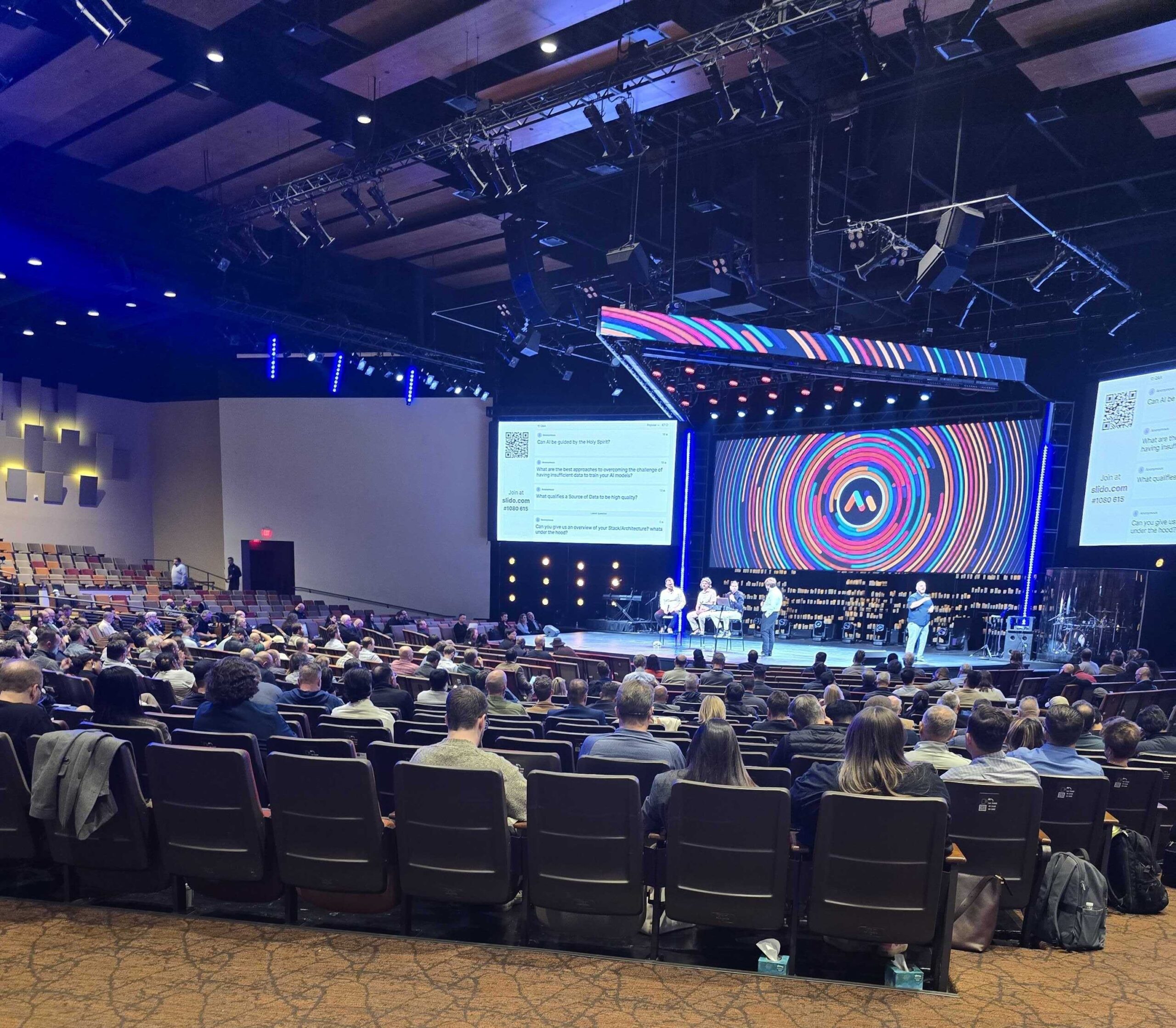
Over 500 participants from over 100 organizations across 30 countries traveled to this Dallas suburb this week for the sold-out Missional AI 2025 summit held at One Community Church’s Plano campus.
Themed “AI Collision — Shaping the Future Together,” the three-day conference explored the technical and spiritual aspects of how AI can amplify “Kingdom impact” through cross-disciplinary collaboration, bringing together AI professionals, church leaders and mission advocates to tackle ethical AI, theology and technology, as well as AI’s role in the Church.
The lineup of speakers included Pat Gelsinger, former CEO of Intel and chairman of Gloo — a leading partner of the event — and David Kinnaman, CEO of Barna Group, along with leaders from Google DeepMind, Meta’s NLLB AI division, McKinsey, MasterWorks and the TV hit show “The Chosen.”
From keynote messages to breakout sessions, the Missional AI conference covered a broad spectrum of topics and buzz phrases pertaining to AI, including what’s known as “agentic AI,” which utilizes autonomous systems to make operational decisions and perform tasks without human intervention.
Also, a topic of conversation was how future missions will integrate a blockchain-based version of the internet known as Web3 to expand the reach of the Gospel message.
The panel titled “The Sweet Smell of Data: Fertilizing the Work of Bible Translators with AI” with developers Daniel Wilson and Jacob Bullock focused on leveraging data to scale the work of Bible translators using AI. Panelists solicited questions from the audience, one of which focused on the emerging tension between human endeavor and technological prowess — and where the role of the Holy Spirit fits in.
“I think that ultimately, God and the Holy Spirit works through the Church, through people to translate the Bible,” said Wilson, who described AI as a supportive tool.
“What we’re trying to do here with these models … is that we’re trying to build a model that is a model of the translation team. It’s a model of people. It’s a model of the decisions and the style, the way that the team would translate the Bible. … It’s assisting the translation team, but at the heart of this, it’s the team, it’s the people in it, that the technology is there to help.”
Bullock, a biblical scholar and linguist, agreed.
“I want to pull it back to our title and the metaphor of data as fertilizer, because the heart of a translation project is always people. It’s always the language community, it’s always the translators, and so yes, absolutely they can and often are filled with the spirit of God. So what we’re doing is not replacing that reality. We are fertilizing it.”
By eliminating or reducing “drudgery” aspects of the translation process, he believes that, ultimately, human resources will be freed up to focus on the more spiritual aspects of translation.
“A lot of the value created by AI is augmenting drudgery … and reducing the time to insight. … There are certain parts of translation that are absolute drudgery,” said Bullock. “That can be augmented and automated. … For us, there’s not a moral quandary or a theological problem here because we don’t see any of this as replacing the human-centric nature of Bible translation.”
Innovations for Bible translation were also unveiled at the summit, such as XRI’s offline AI device for remote translation, which allows missionaries to translate the Bible in hostile areas without government detection.
“Language is a major barrier for doing translation, but there’s a lot of places that we want to work, or we need to work; either there’s no internet, or there are security or privacy issues, right?” said Wilson. “And so there are a lot of different contexts where Bible translation needs to be done, the government’s not particularly excited about it, right? … That’s what this is.”
Richard Zhang, a researcher with Google DeepMind, reflected in his keynote address on Christians working in the AI development field on better ways to define the conversation surrounding AI and some of life’s biggest questions.
Zhang framed AI’s reasoning advancements through a theological lens.
“It’s not just blurring the lines between human and AI, it’s actually blurring the lines between life and death itself in many ways,” he argued. “Instead of thinking of AI becoming more human, I … would propose that it’s more like AI is exposing the parts of us that were dead already.”
He highlighted technical applications such as large language models — the technology behind the generative AI boom — as a new kind of “judge” which uses reasoning processes called “chain of thought” to evaluate outputs. Zhang envisioned a “reasoning revolution” on the horizon that will ultimately deepen our knowledge of God.
“As our reasoning capabilities become cheaper and we no longer idolize people who are smart, … I believe it’ll all point to Jesus,” he said.
“As intelligence gets cheaper, I believe it’ll humble us, it’ll make us become truly desperate for God in a way that will be almost uncomfortable,” He reflected. “Again this idea of like blurring the lines between humanity between uh robots and between God, … as we blur this line, we’ll discover what really makes us Christian, what really gives us life and what really helps us to … understand what it means to be made in the image of God.”
In the negative, however, Zhang warned that AI prompts deeper identity questions about what it means to be alive and how we fit into God’s divine and eternal plan.
“This idea of like blurring the lines between humanity between robots and between God … as we blur this line, we’ll discover what really makes us Christian, what really gives us life and what really helps us to … understand what it means to be made in the image of God,” he said.
However, that level of mastery over technology could lead to adverse consequences, including the rise of human hubris.
“A lot of people in the world are thinking we’re, like, almost demigods,” said Zhang. “We can escape death; we can put our brains into this thing; we can … use AI agents and have my army robot code up everything for me. I think all of that reveals that there is something in us that wants to connect with the holy.”
While the world recognizes AI’s seemingly limitless potential, what about its ability to mimic the human experience? In his keynote on theology and technology, Dr. John Dyer of Dallas Theological Seminary praised the advent of AI.
“Theologically speaking, the technology is just good, full stop. When God says he creates things and he says it’s good, that’s part of that goodness of creation.” Yet, he cautioned that while AI may be good, it’s also “not neutral,” because “whenever we use tools, they always form us in interesting and sometimes unexpected ways.”
Dyer tied this view back to the book of Genesis and the creation mandate given to Adam and Eve. “Our use of tools, this is part of what God made us to do,” he added. He also celebrated technology’s societal impact, like reducing poverty from 90% to 10% and boosting literacy from 10% to 90% over the last 200 years, but warned of unintended effects. “Abundance is often something that we struggle with,” he said.
“With every new technological power comes an increased and even more difficult need for discipline.”
As for the possibility of AI expressing empathy and other human emotions, Dyer sidestepped existential debates about AI becoming more humanlike in its behavior and mannerisms. “I don’t know that it really matters” whether AI has empathy, he said, because “what people are experiencing when they talk to AI … most people don’t have anybody in their life who can listen to them for 30 minutes with a sort of non-judgmental caring attitude.”
The proper response, he said, is to learn what we can from the technology. “One of the most counter-cultural skills that you could develop as a human being in the 21st century is the ability to listen to, to really actually listen, because AIs are way better than almost any of us are,” said Dyer.
Citing a biblical charge from Joshua 8:1 — “Yahweh said to Joshua, don’t fear or be dismayed” — in which God commanded Joshua to take the city of Ai, Dyer concluded by playfully urging attendees to “go attack AI” and “reclaim technology” as a “good, good gift from God.”

Get Our Latest News for FREE
Subscribe to get daily/weekly email with the top stories (plus special offers!) from The Christian Post. Be the first to know.
Google developer argues AI reach ‘exposing the parts of us that were dead already’
PLANO, Texas — As artificial intelligence (AI) surges into the future, reshaping the world with breathtaking speed, many Christians in the tech realm are wrestling with its spiritual weight and wondering how this powerful technology might redefine faith, work and human connection in the days ahead.
Over 500 participants from over 100 organizations across 30 countries traveled to this Dallas suburb this week for the sold-out Missional AI 2025 summit held at One Community Church’s Plano campus.
Themed “AI Collision — Shaping the Future Together,” the three-day conference explored the technical and spiritual aspects of how AI can amplify “Kingdom impact” through cross-disciplinary collaboration, bringing together AI professionals, church leaders and mission advocates to tackle ethical AI, theology and technology, as well as AI’s role in the Church.
The lineup of speakers included Pat Gelsinger, former CEO of Intel and chairman of Gloo — a leading partner of the event — and David Kinnaman, CEO of Barna Group, along with leaders from Google DeepMind, Meta’s NLLB AI division, McKinsey, MasterWorks and the TV hit show “The Chosen.”
From keynote messages to breakout sessions, the Missional AI conference covered a broad spectrum of topics and buzz phrases pertaining to AI, including what’s known as “agentic AI,” which utilizes autonomous systems to make operational decisions and perform tasks without human intervention.
Also, a topic of conversation was how future missions will integrate a blockchain-based version of the internet known as Web3 to expand the reach of the Gospel message.
The panel titled “The Sweet Smell of Data: Fertilizing the Work of Bible Translators with AI” with developers Daniel Wilson and Jacob Bullock focused on leveraging data to scale the work of Bible translators using AI. Panelists solicited questions from the audience, one of which focused on the emerging tension between human endeavor and technological prowess — and where the role of the Holy Spirit fits in.
“I think that ultimately, God and the Holy Spirit works through the Church, through people to translate the Bible,” said Wilson, who described AI as a supportive tool.
“What we’re trying to do here with these models … is that we’re trying to build a model that is a model of the translation team. It’s a model of people. It’s a model of the decisions and the style, the way that the team would translate the Bible. … It’s assisting the translation team, but at the heart of this, it’s the team, it’s the people in it, that the technology is there to help.”
Bullock, a biblical scholar and linguist, agreed.
“I want to pull it back to our title and the metaphor of data as fertilizer, because the heart of a translation project is always people. It’s always the language community, it’s always the translators, and so yes, absolutely they can and often are filled with the spirit of God. So what we’re doing is not replacing that reality. We are fertilizing it.”
By eliminating or reducing “drudgery” aspects of the translation process, he believes that, ultimately, human resources will be freed up to focus on the more spiritual aspects of translation.
“A lot of the value created by AI is augmenting drudgery … and reducing the time to insight. … There are certain parts of translation that are absolute drudgery,” said Bullock. “That can be augmented and automated. … For us, there’s not a moral quandary or a theological problem here because we don’t see any of this as replacing the human-centric nature of Bible translation.”
Innovations for Bible translation were also unveiled at the summit, such as XRI’s offline AI device for remote translation, which allows missionaries to translate the Bible in hostile areas without government detection.
“Language is a major barrier for doing translation, but there’s a lot of places that we want to work, or we need to work; either there’s no internet, or there are security or privacy issues, right?” said Wilson. “And so there are a lot of different contexts where Bible translation needs to be done, the government’s not particularly excited about it, right? … That’s what this is.”
Richard Zhang, a researcher with Google DeepMind, reflected in his keynote address on Christians working in the AI development field on better ways to define the conversation surrounding AI and some of life’s biggest questions.
Zhang framed AI’s reasoning advancements through a theological lens.
“It’s not just blurring the lines between human and AI, it’s actually blurring the lines between life and death itself in many ways,” he argued. “Instead of thinking of AI becoming more human, I … would propose that it’s more like AI is exposing the parts of us that were dead already.”
He highlighted technical applications such as large language models — the technology behind the generative AI boom — as a new kind of “judge” which uses reasoning processes called “chain of thought” to evaluate outputs. Zhang envisioned a “reasoning revolution” on the horizon that will ultimately deepen our knowledge of God.
“As our reasoning capabilities become cheaper and we no longer idolize people who are smart, … I believe it’ll all point to Jesus,” he said.
“As intelligence gets cheaper, I believe it’ll humble us, it’ll make us become truly desperate for God in a way that will be almost uncomfortable,” He reflected. “Again this idea of like blurring the lines between humanity between uh robots and between God, … as we blur this line, we’ll discover what really makes us Christian, what really gives us life and what really helps us to … understand what it means to be made in the image of God.”
In the negative, however, Zhang warned that AI prompts deeper identity questions about what it means to be alive and how we fit into God’s divine and eternal plan.
“This idea of like blurring the lines between humanity between robots and between God … as we blur this line, we’ll discover what really makes us Christian, what really gives us life and what really helps us to … understand what it means to be made in the image of God,” he said.
However, that level of mastery over technology could lead to adverse consequences, including the rise of human hubris.
“A lot of people in the world are thinking we’re, like, almost demigods,” said Zhang. “We can escape death; we can put our brains into this thing; we can … use AI agents and have my army robot code up everything for me. I think all of that reveals that there is something in us that wants to connect with the holy.”
While the world recognizes AI’s seemingly limitless potential, what about its ability to mimic the human experience? In his keynote on theology and technology, Dr. John Dyer of Dallas Theological Seminary praised the advent of AI.
“Theologically speaking, the technology is just good, full stop. When God says he creates things and he says it’s good, that’s part of that goodness of creation.” Yet, he cautioned that while AI may be good, it’s also “not neutral,” because “whenever we use tools, they always form us in interesting and sometimes unexpected ways.”
Dyer tied this view back to the book of Genesis and the creation mandate given to Adam and Eve. “Our use of tools, this is part of what God made us to do,” he added. He also celebrated technology’s societal impact, like reducing poverty from 90% to 10% and boosting literacy from 10% to 90% over the last 200 years, but warned of unintended effects. “Abundance is often something that we struggle with,” he said.
“With every new technological power comes an increased and even more difficult need for discipline.”
As for the possibility of AI expressing empathy and other human emotions, Dyer sidestepped existential debates about AI becoming more humanlike in its behavior and mannerisms. “I don’t know that it really matters” whether AI has empathy, he said, because “what people are experiencing when they talk to AI … most people don’t have anybody in their life who can listen to them for 30 minutes with a sort of non-judgmental caring attitude.”
The proper response, he said, is to learn what we can from the technology. “One of the most counter-cultural skills that you could develop as a human being in the 21st century is the ability to listen to, to really actually listen, because AIs are way better than almost any of us are,” said Dyer.
Citing a biblical charge from Joshua 8:1 — “Yahweh said to Joshua, don’t fear or be dismayed” — in which God commanded Joshua to take the city of Ai, Dyer concluded by playfully urging attendees to “go attack AI” and “reclaim technology” as a “good, good gift from God.”
Get Our Latest News for FREE
Subscribe to get daily/weekly email with the top stories (plus special offers!) from The Christian Post. Be the first to know.


