


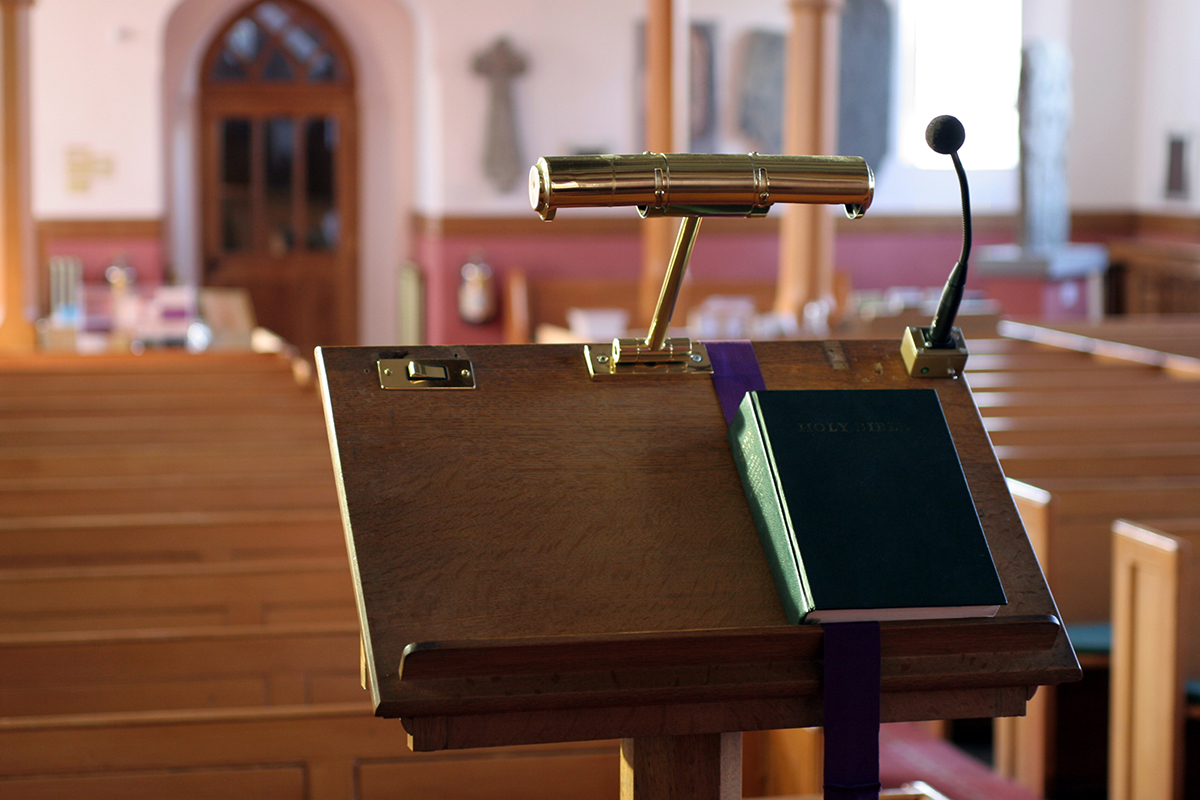

As a preacher, my favorite Sunday of the year is Easter Sunday. It’s the Sunday each year when we have the fullest worship services because people come to church who never darken the door of a church the rest of the year. I have the inestimable privilege of proclaiming Christ to people in greater numbers who are still dead in their sins and in dire need of salvation.
Every year, it seems like many pastors crack under the pressure that can come with the Easter sermon. Egregious things are said from pulpits as pastors try to connect with their hearers, lessen the offense of the cross, or manipulate unbelievers into a profession of faith.
At one Easter Sunday church service, the pastor preached an entire sermon based on what is commonly called Pascal’s wager. Pascal’s wager is essentially a philosophy that argues from probable outcomes that believing in Jesus is the best decision someone can make. The argument posits that Christianity must either be true or false. If Christianity is false, when Christians die, they simply cease to exist, and nothing is lost. They are no worse off than if they had not been Christians. However, if Christianity is true, those who are not Christians will be immensely worse off when they are dead. Therefore, there is no inherent risk in becoming a Christian, but there is massive risk in rejecting Christ, so people should become Christians to mitigate the danger of eternal condemnation. The worst possible outcome is that they cease to exist and never know they were wrong.
But Pascal’s wager, as I would come to understand later, fails to recognize that you cannot reason people into the Kingdom of God by risk analysis. Furthermore, becoming a Christian is not about hedging your bets against eternal fire and brimstone. Conversion is a supernatural work of the Spirit of God whereby the heart of a sinner is transformed so that the sinner does not see Christ as fire insurance but as the glorious, beautiful, irresistible Savior that He truly is.
While a high school student with a young faith might be excused for being ignorant of what conversion means, a pastor cannot.
At another Easter service, a pastor was seeking to appeal to those in the audience who might be skeptical of Christianity because of its complicated doctrinal beliefs, like the Trinity. He said, “I had a young man come up to me after service and he goes, ‘So pastor, do I have to believe in the Trinity?’ He grew up in a Mormon church, and he was like, ‘Do I have to believe in all these things?’ And I said, ‘No, you just have to believe in Jesus, that He loves you, that He died for you, and that He can forgive you of your sins. Don’t make it more complicated than you need to.’” This pastor indicated to his audience that belief in the Trinity is optional if they want to believe in Jesus and be saved.
The desire to reduce or eliminate unnecessary barriers to the Gospel is laudable, but some barriers are necessary, and the doctrine of the Trinity is one of them. When we tell someone they need to believe in Jesus, we must be absolutely clear who Jesus is. Jesus is the Son of God, God in human flesh. He is not a created being or a divine being who is ontologically inferior to God the Father. He is the Word made flesh, very God of very God. You cannot believe in Jesus without believing in the Trinity, because any denial of the Trinity automatically means a denial of the deity of Christ. That does not mean that a person needs to understand the Trinity, which is something no one adequately does outside of the Triune God Himself. Nevertheless, we must believe what we cannot fully understand to be saved. If someone says they believe in Jesus but denies the doctrine of the Trinity, they do not believe in the biblical Jesus.
Famous megachurch pastor Andy Stanley tried to appeal to skeptics at his recent Easter services by downplaying the authority of the Bible. He said:
“We don’t believe that Jesus rose from the dead because the Bible tells us so. Did you know that it’s actually the other way around? Did you know that we have this fabulous, incredible book because of the resurrection? If there was no resurrection, there’s no Bible. If there’s no resurrection, there’s no church … we believe that Jesus rose from the dead not because the incredible Bible tells us so. No, it’s better than that. We believe because Matthew, who was an eyewitness of the resurrection, documented it in the first century.”
Stanley then went on to name some of the other eyewitnesses of Jesus’ resurrection and how they all wrote about it. His argument is that the Bible is not the ultimate authority; the eyewitness accounts are the ultimate authority and reason we believe that Jesus rose from the dead. The hope is that by removing the Bible from the equation, skeptics will have to reckon with eyewitness testimony rather than the Bible.
What Stanley fails to grapple with, however, is that the eyewitness testimony he cites is only found in one place, namely, the Bible. You cannot separate the testimony of Matthew, Mark, Peter, Luke, Paul, John, James, and so on from the Bible because the only words we have from their pens are the New Testament documents.
But an even greater problem than this is that it makes human testimony the authority rather than divine inspiration. How do we know that we can trust Matthew’s testimony? Or Paul’s? Or Peter’s? Whenever people testify to what they have seen, they almost always mingle some error with the truth. Even eyewitnesses with impeccable integrity fail to remember everything with absolute precision. Peter recognized the inherent problem with eyewitness testimony in 2 Peter 1:19, “And we have as more sure the prophetic word, to which you do well to pay attention as to a lamp shining in a dark place” (LSB). After recounting his experience on the Mount of Transfiguration, Peter says that more sure than his experience is the prophetic word that comes from the Spirit of God. Peter’s testimony is credible because he was carried along by the Holy Spirit as he wrote the inspired text. Stanley undermines the credibility of Scripture by trying to divorce the eyewitness testimony from the Bible. Even if his intentions are noble, trying to convince skeptics to trust in Christ, his method is defective, dangerous, and disastrous.
These three examples are representative of a massive problem that occurs every year on Easter Sunday. Preachers feel the burden to try to win souls for Christ, and in so doing end up compromising on significant doctrinal points. The message becomes blurred at best, unbiblical at worst, and people leave more confused about God and Scripture than they came.
As preachers, we don’t need to feel this kind of pressure on Easter Sunday or any other Sunday. Paul reminds us, “For I am not ashamed of the Gospel, for it is the power of God for salvation to everyone who believes, to the Jew first and also to the Greek” (Romans 1:16, LSB). The power is in the Gospel itself, not in the preacher. Rather than feeling the pressure to preach a great sermon, to eliminate offensive truths, or to minimize doctrine, preachers simply need to preach the Gospel unashamedly. The clearer the Gospel becomes, the more powerful the sermon will be. Cleverness has never converted a single soul, but Spirit-filled Gospel preaching has converted untold sinners.
Next Easter, ignore the pressure to be relevant, interesting, or funny. If you want to take full advantage of a full worship center, just preach the Gospel.

Get Our Latest News for FREE
Subscribe to get daily/weekly email with the top stories (plus special offers!) from The Christian Post. Be the first to know.
Dr. Robb Brunansky is the Pastor-Teacher of Desert Hills Bible Church in Glendale, Arizona. Follow him on Twitter at @RobbBrunansky.
As a preacher, my favorite Sunday of the year is Easter Sunday. It’s the Sunday each year when we have the fullest worship services because people come to church who never darken the door of a church the rest of the year. I have the inestimable privilege of proclaiming Christ to people in greater numbers who are still dead in their sins and in dire need of salvation.
Every year, it seems like many pastors crack under the pressure that can come with the Easter sermon. Egregious things are said from pulpits as pastors try to connect with their hearers, lessen the offense of the cross, or manipulate unbelievers into a profession of faith.
At one Easter Sunday church service, the pastor preached an entire sermon based on what is commonly called Pascal’s wager. Pascal’s wager is essentially a philosophy that argues from probable outcomes that believing in Jesus is the best decision someone can make. The argument posits that Christianity must either be true or false. If Christianity is false, when Christians die, they simply cease to exist, and nothing is lost. They are no worse off than if they had not been Christians. However, if Christianity is true, those who are not Christians will be immensely worse off when they are dead. Therefore, there is no inherent risk in becoming a Christian, but there is massive risk in rejecting Christ, so people should become Christians to mitigate the danger of eternal condemnation. The worst possible outcome is that they cease to exist and never know they were wrong.
But Pascal’s wager, as I would come to understand later, fails to recognize that you cannot reason people into the Kingdom of God by risk analysis. Furthermore, becoming a Christian is not about hedging your bets against eternal fire and brimstone. Conversion is a supernatural work of the Spirit of God whereby the heart of a sinner is transformed so that the sinner does not see Christ as fire insurance but as the glorious, beautiful, irresistible Savior that He truly is.
While a high school student with a young faith might be excused for being ignorant of what conversion means, a pastor cannot.
At another Easter service, a pastor was seeking to appeal to those in the audience who might be skeptical of Christianity because of its complicated doctrinal beliefs, like the Trinity. He said, “I had a young man come up to me after service and he goes, ‘So pastor, do I have to believe in the Trinity?’ He grew up in a Mormon church, and he was like, ‘Do I have to believe in all these things?’ And I said, ‘No, you just have to believe in Jesus, that He loves you, that He died for you, and that He can forgive you of your sins. Don’t make it more complicated than you need to.’” This pastor indicated to his audience that belief in the Trinity is optional if they want to believe in Jesus and be saved.
The desire to reduce or eliminate unnecessary barriers to the Gospel is laudable, but some barriers are necessary, and the doctrine of the Trinity is one of them. When we tell someone they need to believe in Jesus, we must be absolutely clear who Jesus is. Jesus is the Son of God, God in human flesh. He is not a created being or a divine being who is ontologically inferior to God the Father. He is the Word made flesh, very God of very God. You cannot believe in Jesus without believing in the Trinity, because any denial of the Trinity automatically means a denial of the deity of Christ. That does not mean that a person needs to understand the Trinity, which is something no one adequately does outside of the Triune God Himself. Nevertheless, we must believe what we cannot fully understand to be saved. If someone says they believe in Jesus but denies the doctrine of the Trinity, they do not believe in the biblical Jesus.
Famous megachurch pastor Andy Stanley tried to appeal to skeptics at his recent Easter services by downplaying the authority of the Bible. He said:
“We don’t believe that Jesus rose from the dead because the Bible tells us so. Did you know that it’s actually the other way around? Did you know that we have this fabulous, incredible book because of the resurrection? If there was no resurrection, there’s no Bible. If there’s no resurrection, there’s no church … we believe that Jesus rose from the dead not because the incredible Bible tells us so. No, it’s better than that. We believe because Matthew, who was an eyewitness of the resurrection, documented it in the first century.”
Stanley then went on to name some of the other eyewitnesses of Jesus’ resurrection and how they all wrote about it. His argument is that the Bible is not the ultimate authority; the eyewitness accounts are the ultimate authority and reason we believe that Jesus rose from the dead. The hope is that by removing the Bible from the equation, skeptics will have to reckon with eyewitness testimony rather than the Bible.
What Stanley fails to grapple with, however, is that the eyewitness testimony he cites is only found in one place, namely, the Bible. You cannot separate the testimony of Matthew, Mark, Peter, Luke, Paul, John, James, and so on from the Bible because the only words we have from their pens are the New Testament documents.
But an even greater problem than this is that it makes human testimony the authority rather than divine inspiration. How do we know that we can trust Matthew’s testimony? Or Paul’s? Or Peter’s? Whenever people testify to what they have seen, they almost always mingle some error with the truth. Even eyewitnesses with impeccable integrity fail to remember everything with absolute precision. Peter recognized the inherent problem with eyewitness testimony in 2 Peter 1:19, “And we have as more sure the prophetic word, to which you do well to pay attention as to a lamp shining in a dark place” (LSB). After recounting his experience on the Mount of Transfiguration, Peter says that more sure than his experience is the prophetic word that comes from the Spirit of God. Peter’s testimony is credible because he was carried along by the Holy Spirit as he wrote the inspired text. Stanley undermines the credibility of Scripture by trying to divorce the eyewitness testimony from the Bible. Even if his intentions are noble, trying to convince skeptics to trust in Christ, his method is defective, dangerous, and disastrous.
These three examples are representative of a massive problem that occurs every year on Easter Sunday. Preachers feel the burden to try to win souls for Christ, and in so doing end up compromising on significant doctrinal points. The message becomes blurred at best, unbiblical at worst, and people leave more confused about God and Scripture than they came.
As preachers, we don’t need to feel this kind of pressure on Easter Sunday or any other Sunday. Paul reminds us, “For I am not ashamed of the Gospel, for it is the power of God for salvation to everyone who believes, to the Jew first and also to the Greek” (Romans 1:16, LSB). The power is in the Gospel itself, not in the preacher. Rather than feeling the pressure to preach a great sermon, to eliminate offensive truths, or to minimize doctrine, preachers simply need to preach the Gospel unashamedly. The clearer the Gospel becomes, the more powerful the sermon will be. Cleverness has never converted a single soul, but Spirit-filled Gospel preaching has converted untold sinners.
Next Easter, ignore the pressure to be relevant, interesting, or funny. If you want to take full advantage of a full worship center, just preach the Gospel.
Get Our Latest News for FREE
Subscribe to get daily/weekly email with the top stories (plus special offers!) from The Christian Post. Be the first to know.
Dr. Robb Brunansky is the Pastor-Teacher of Desert Hills Bible Church in Glendale, Arizona. Follow him on Twitter at @RobbBrunansky.


